

Bitar Machine Design was founded in 2019 with a simple belief: those that value product development develop valuable products. What began as a hands-on effort to help inventors and small teams navigate the often overwhelming journey from concept to physical product quickly grew into a dedicated engineering practice built around clarity, speed, and practical execution.
Drawing on a background in mechanical engineering and a passion for solving real-world problems, the company was created to bridge the gap between vision and manufacturable design by offering thoughtful engineering, transparent collaboration, and a level of agility that larger firms often can’t match. Today, Bitar Machine Design continues to partner closely with clients to transform early-stage ideas into functional prototypes and production-ready solutions, without losing sight of the curiosity and craftsmanship that sparked its start.
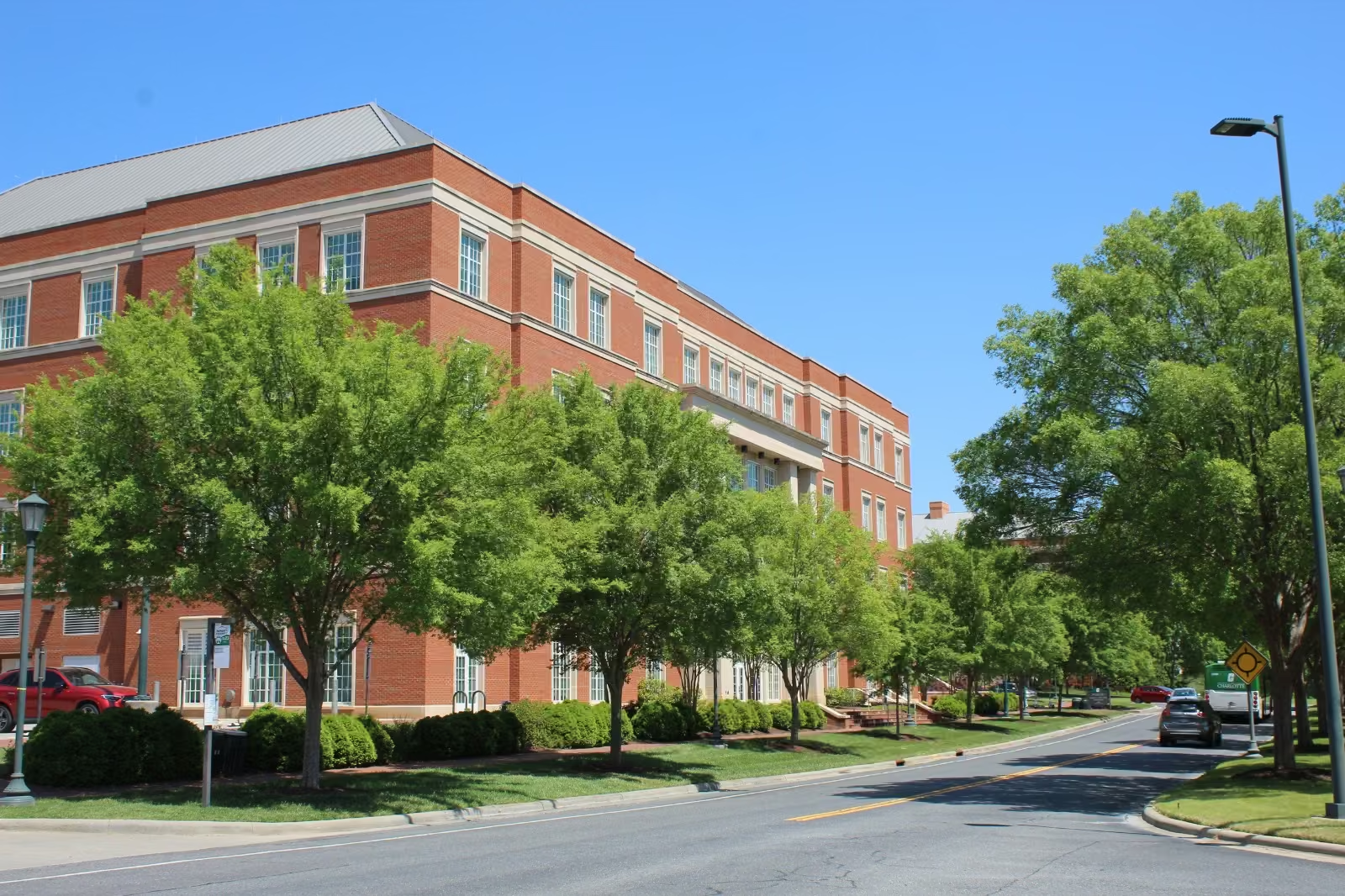
Bitar Machine Design’s office are located in the PORTAL Building on the campus of University of North Carolina at Charlotte (UNCC). Bitar Machine Design has maintained a close partnership with UNCC over the years in an effort to not only give back to the community through giving talented students paid opportunities to practice engineering in a real environment but to also enhance our service offering to our clients through the use and sponsorship of UNCC’s SuperFab Lab.
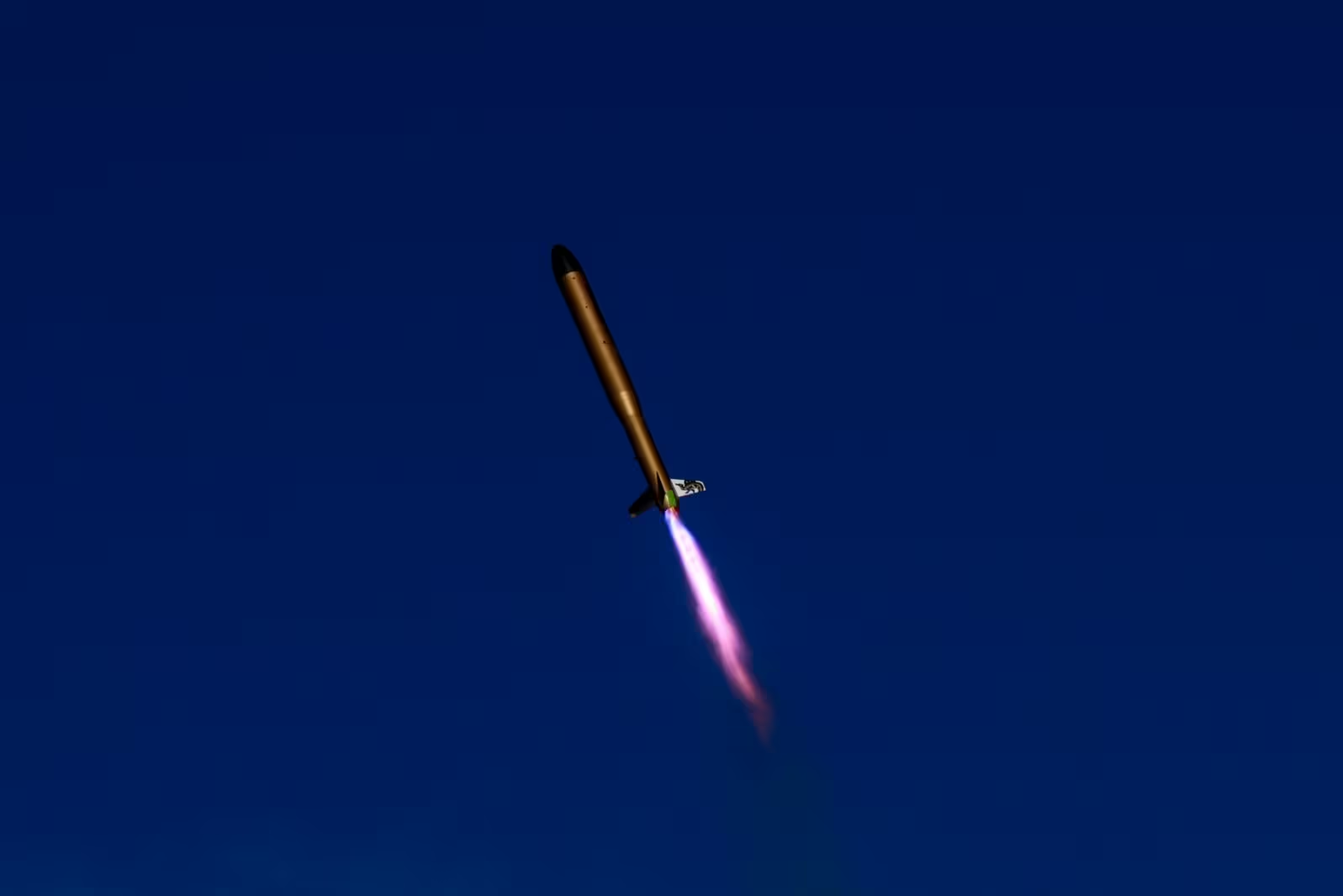
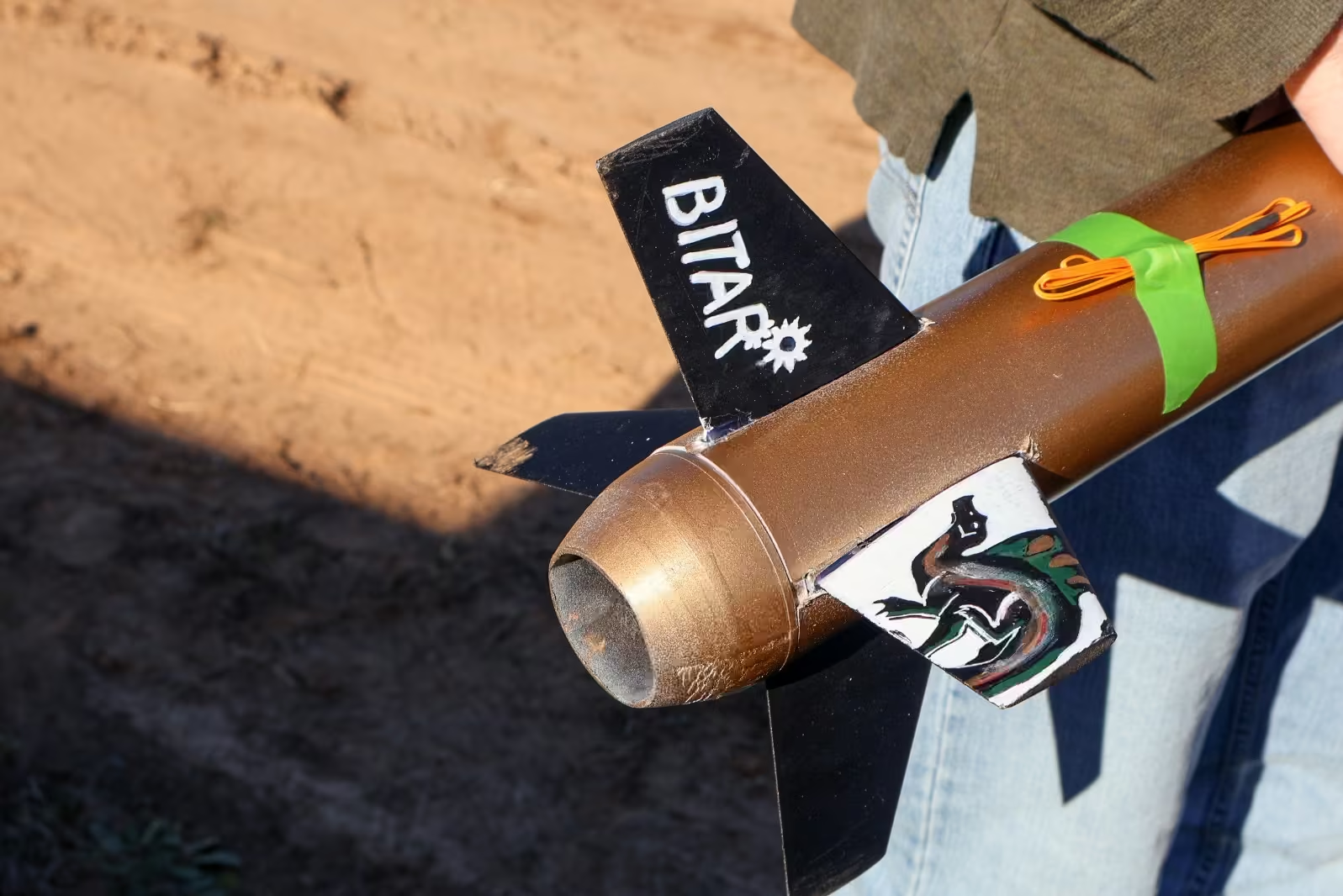
In order to foster a competitive spirit of practical engineering Bitar Machine Design has been a long-term sponsor of student competition teams and clubs including UNCC’s NASA USLI Rocketry Team and The Combat Robotics Club.


- CEO
- Inventor
- Mechanical Engineer
Justin Bitar brings over 12 years of engineering experience and multiple patents. He has worked with automotive, heavy industrial, and consumer product companies and leverage design and management skills garnered from his professional experiences to lead his team at Bitar Machine Design.
What are the stages of product development?
Feasibility Study
- Preliminary research & Calculations
- Proof of concept CAD design
- Proof of concept circuit design
Concept Development
- Preliminary CAD Models
- Preliminary PCB Design
Alpha prototype
- Functional Testing
Detailed Design Development
- Design revisions based on Alpha Testing
- Design for Manufacturing
- Design for Assembly
- Manufacturing Drawings
Beta Prototype
- Functional Testing
- Finishing for Demonstration
Manufacturing
- Costed Bill of Materials
- Sourcing and Supply Chain Development
- Manufacturing purchase orders
What is the difference between a proof of concept, a functional prototype, and a production-ready design?
- Proof of concept is the first stage. Bare bones physical prototype often using off the shelf components assembled together quickly to prove the idea. This stage is sometimes referred to as the MVP (minimal viable product).
- Functional prototyping, sometimes referred to as concept development, begins once the proof of concept has validated the idea. During this phase, preliminary engineering and design work are completed to bring the prototype’s aesthetics and functionality closer to the final product vision.
- Production-ready design is the final stage. This is where “design for manufacturing” work and manufacturing drawings, electronics bill of materials (EBOM) is completed. Here we take a close look at the mature alpha or beta prototype and make sure can be manufactured for the lowest cost, it’s easy to assemble, and it can be packaged and shipped.
How do I know if my product idea is technically feasible?
We can perform a feasibility study on the idea where we perform high level engineering calculations to determine if the idea is technically possible. Alternatively, this is where the proof-of-concept phase can happen where we build a quick prototype to make sure the idea is sound.
What information should I prepare before starting a product development project?
Concept images like hand drawn sketches or renderings, proof of concept prototypes are always helpful to if you’re able. A realistic budget and timeline as well would help align our work to your product vision.
When should I think about manufacturing during the product development process?
We consider manufacturing processes early in the development process during the concept phase. This helps save time during the design for manufacturing stage.
Do I need a patent before I start prototyping or product development?
Not always. Sometimes it’s better to develop a prototype before seeking IP protection. The patent process can be expensive, and we often advise our clients to prove the idea first before filing a patent application.
What usually makes a physical product difficult or expensive to manufacture?
We are experts at engineering value in the products we work on. What that means is we can usually design a product to be mass-manufactured for the lowest cost. However, things like
- Custom large complex metal CNC parts or metal parts that can’t be stamped or cast or made with any other cheaper process.
- Exotic materials like carbon fiber, titanium, inconel, precious metals etc.
- The latest electronics sensor or component.
- Circuit boards with many layers or that require a unique stack up of layers.
- High density electrical features like micro or buried vias.
- Electronic parts like solar panels that have special import restrictions.
What do I do if my idea is already patented by someone else?
We offer a design circumvention development cycle which involves collecting and evaluating all relevant patents and IP and developing a strategy that avoids infringement.
Can you improve or redesign an existing product, not just develop new ones?
Yes, product adaptation and product improvement projects are great projects and can often offer lower project budgets.
Can I sell/license my product before manufacturing?
- Once you have applied for a provisional patent you are clear to sell os start marketing the product. If you choose not to seek a patent, then you can sell/market at any time.
- Regarding licensing before manufacturing, typically this is not possible. Big companies want to know the product or patent they’re purchasing would sell (i.e. return profit on their investment). So, licensing usually happens after the product has been manufactured and sales have been generated.
- Similarly, early investors want to see a fully functional prototype and a manufacturing plan before investing. Bitar Machine Design has helped many clients develop a manufacturing strategy and build up a supply chain.
Those that value product Development, develop valuable products ™
Expert Engineers
Product Categories
Projects
Clients